
Presidential THC: Infusion, Potency & Extract Science
What Presidential THC covers
Presidential THC is the official guide to the brand's infused product system, its three extract-led series, and the numbers printed on a cannabis label.
It explains flower, concentrate, kief, distillate, live resin, live rosin, THCa, and total THC for Presidential, then points readers to the detailed guides and licensed-retailer path.
Flower, concentrate, and kief
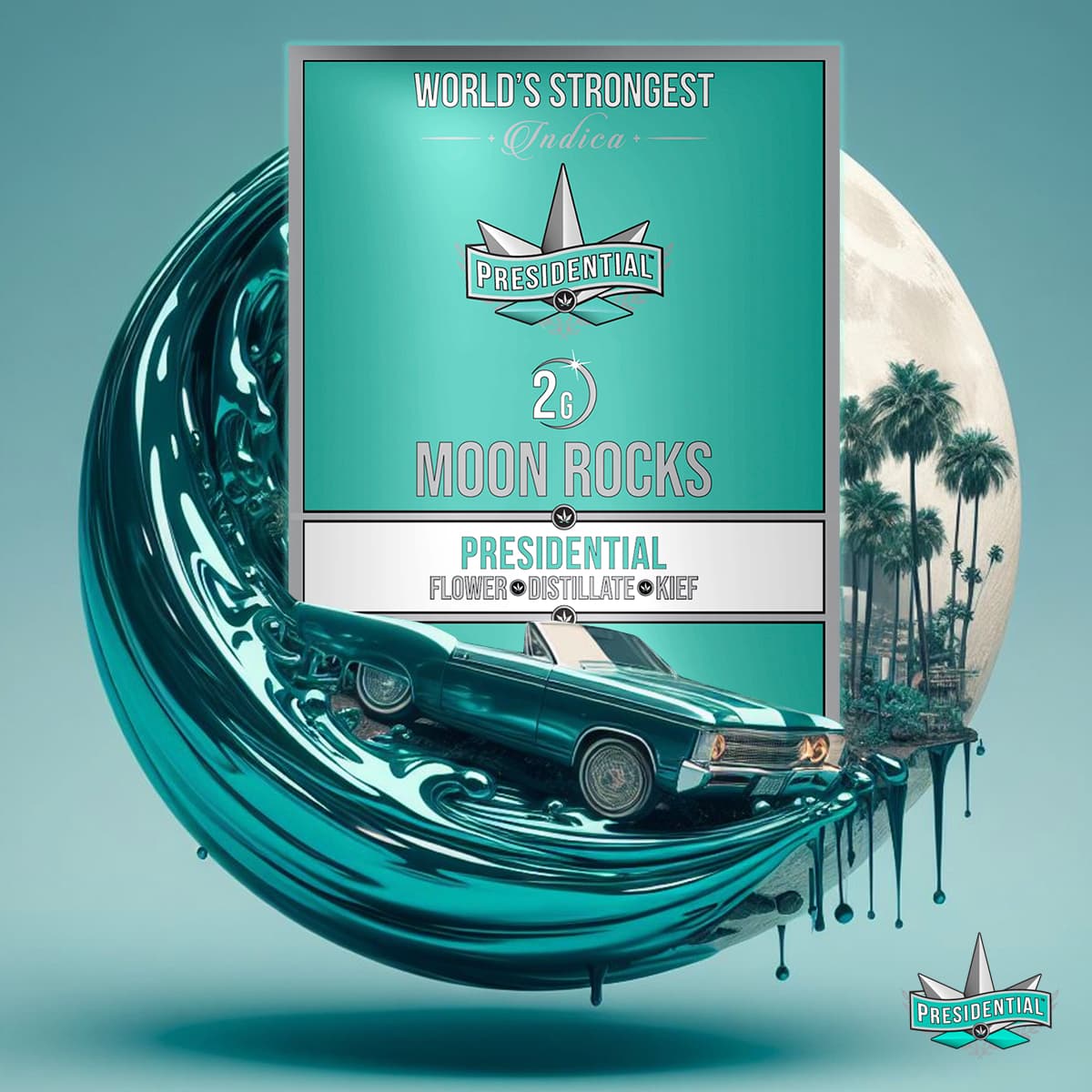
Presidential brand materials describe the flagship Moon Rocks format through three visible roles: flower as the base, cannabis concentrate as the infused component, and kief as the finish.
Flower supplies the plant material and the named product identity. Concentrate supplies the extract component. Kief is the collected trichome material used for the exterior finish.
Potency is batch-specific. Read the current package label and its associated test results rather than inferring a fixed percentage from a format, series, or product name.

The Presidential Infusion System™
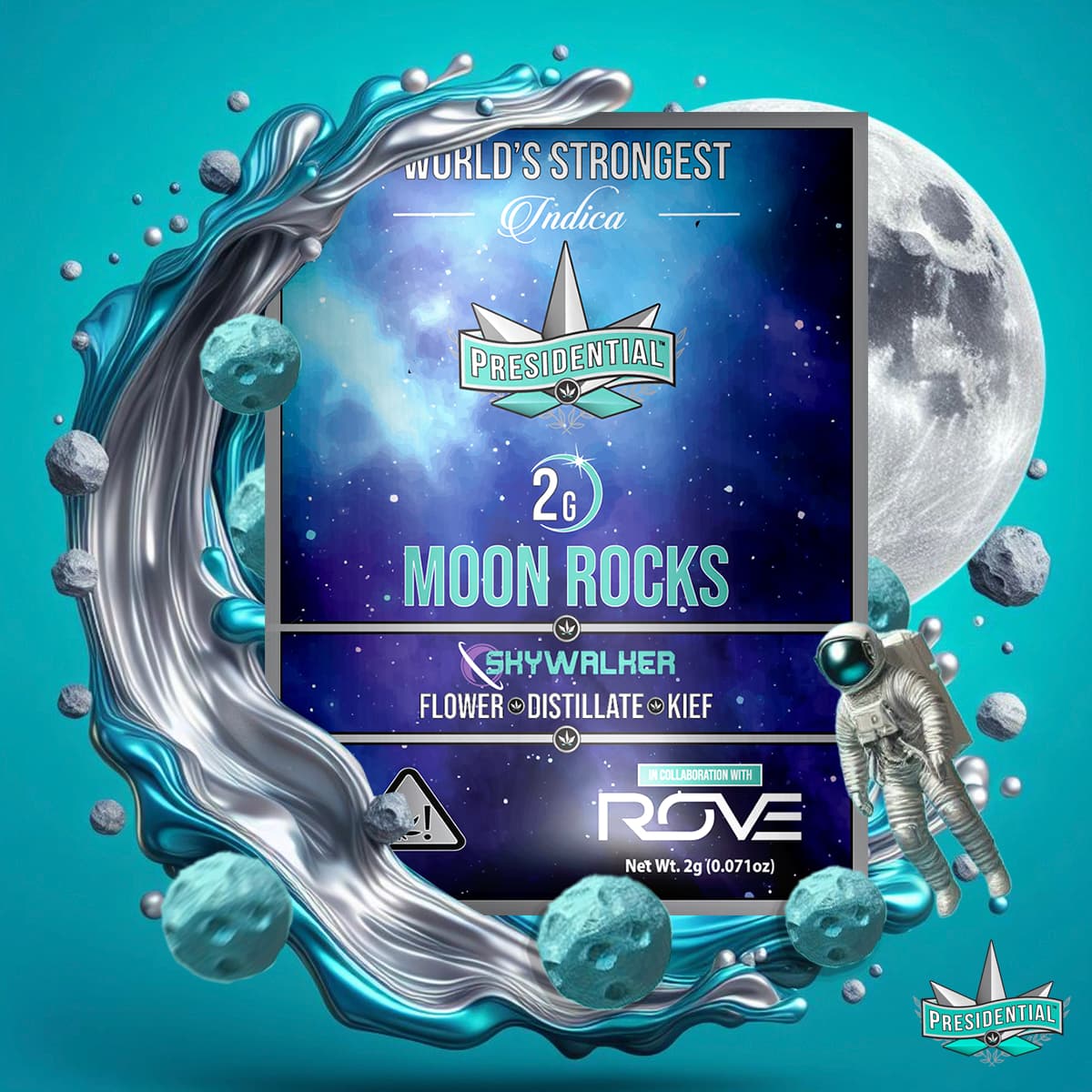
Presidential uses Presidential Infusion System™ as the name for its product framework: flower and cannabis extracts working together in a finished format. The dedicated THC reference explains the distinction between concentrate placed on a surface and concentrate carried through the flower.
The system name identifies Presidential's brand architecture. It does not establish a universal potency, burn, or performance result; the specific package and batch record control those facts.

Three extracts, three series
The catalog is organized by what goes into the product, not by marketing tier.
Distillate is the extract identified with the Silver Flavor Series.
Live resin is the extract identified with the Gold Strain Series and is made from cannabis frozen at harvest rather than first dried and cured.
Live rosin is the solventless extract identified with the Rose Gold Connoisseur Series. Ice water, heat, and pressure are used instead of chemical solvents.
These series descriptions explain the catalog structure. The current package label and batch documentation remain authoritative for a specific product.
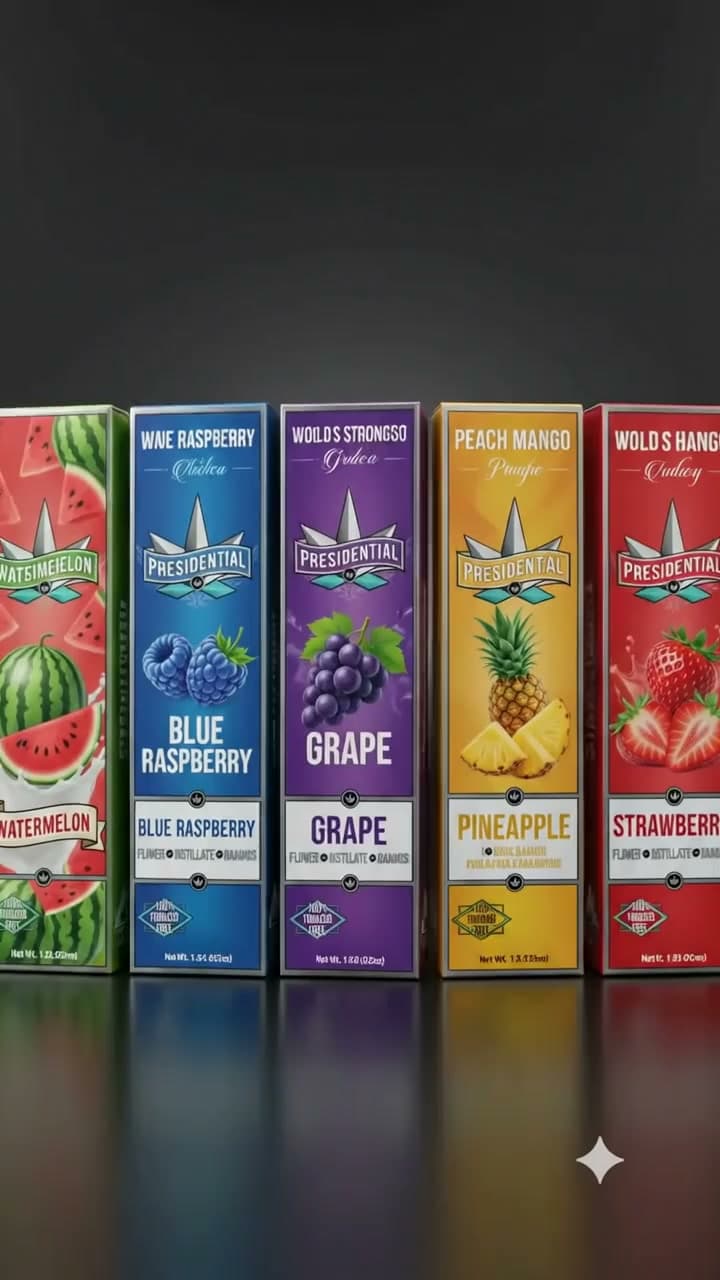
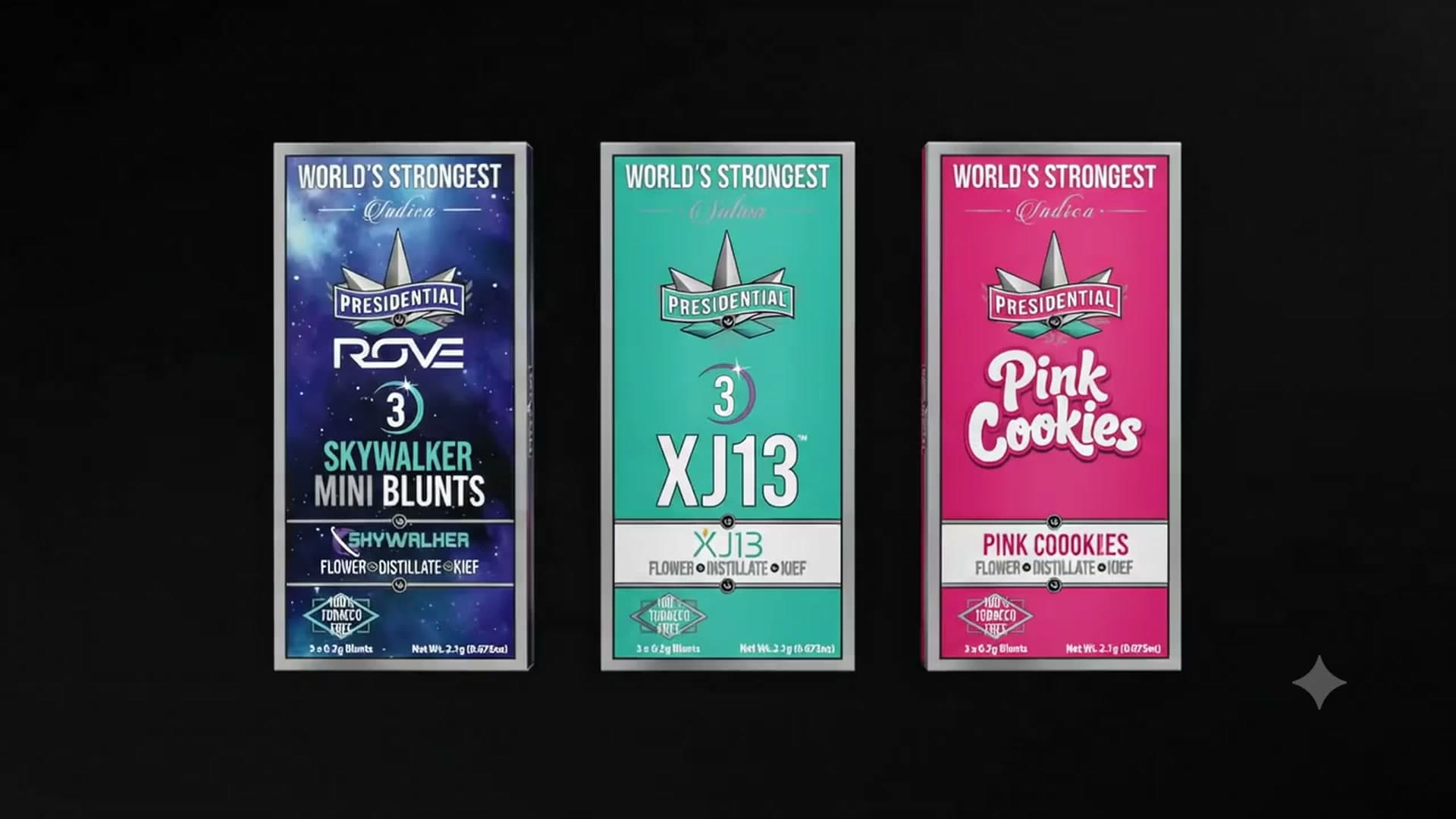
That same infused framework appears in the collaboration catalog as Presidential x THC Design Moon Rocks, Presidential x THC Design Prerolls, and Presidential x THC Design Blunts.

Reading the numbers on a label
A cannabis label may show delta-9 THC, THCa, and a calculated total THC value. Those numbers describe different measurements and should be read with their units and the batch's testing record.
Heat can convert THCa into delta-9 THC through decarboxylation. The conventional total-THC calculation applies a 0.877 conversion factor based on the compounds' molar-mass ratio.
Total THC = (THCa × 0.877) + THC
This formula is documented in NIST's hemp reference-material guidance. The independent source remains non-linked until outbound publication approval is recorded. It explains the calculation; it does not supply the potency of any Presidential product. Use the product's current label and test record for that.
What terpenes contribute to aroma
Terpenes are volatile aromatic compounds that contribute to how cannabis smells and tastes. Their presence does not support a medical, therapeutic, or guaranteed experience claim.
Heat, light, air, and time can change an aromatic profile. Read product-specific descriptions as sensory information and use the package or approved product record for the current batch.
Learn more
The guides go deeper on each of these.